
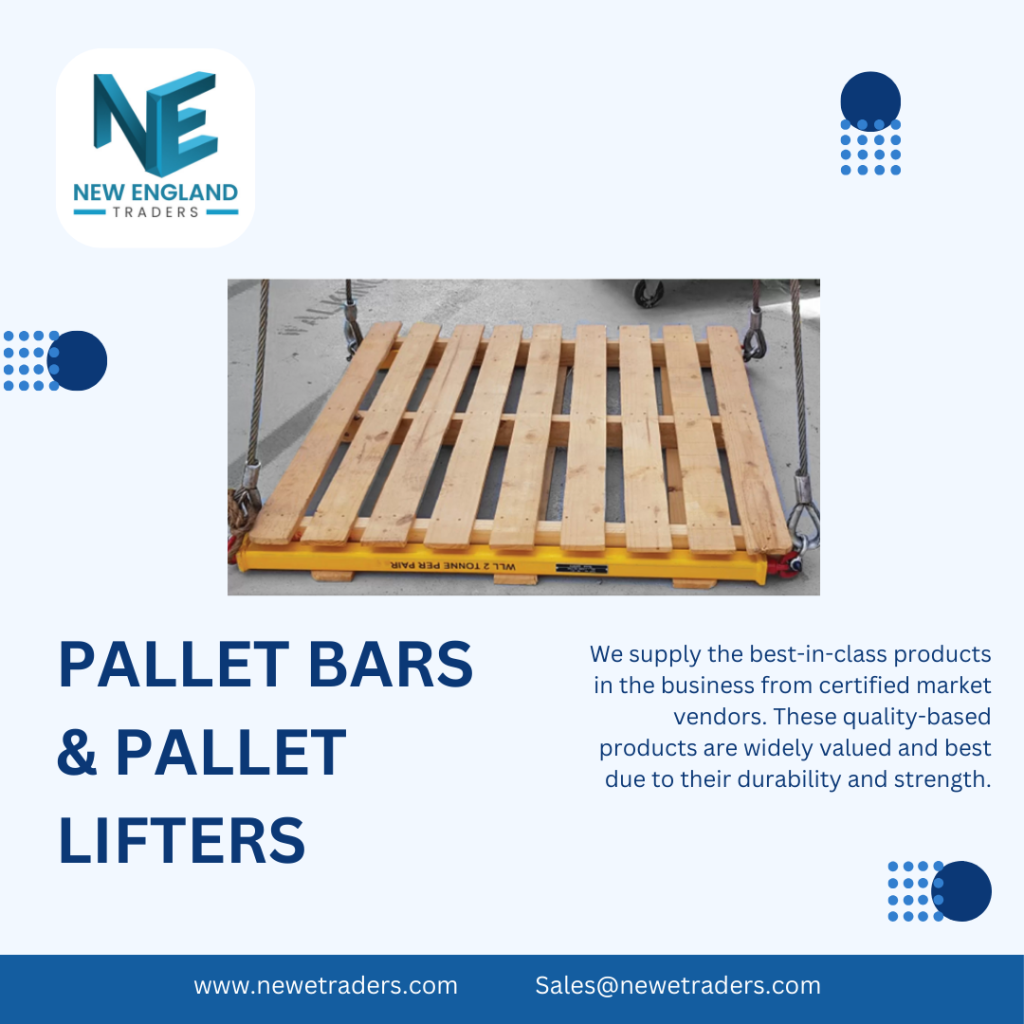
Heavy-Duty Pallet Lifting Bars: Safe Industrial Lifting Equipment for Material Handling
In today’s fast-paced industrial environment, workplace safety and operational efficiency are top priorities. Whether in warehouses, manufacturing facilities, construction sites, ports, offshore platforms, or oil and gas operations, safely lifting and transporting palletized loads is essential to maintaining productivity while minimizing risk.
Pallet Lifting Bars are purpose-built lifting accessories designed to improve the safety and efficiency of pallet handling. By providing secure lifting points for cranes, hoists, and other overhead lifting equipment, they help reduce manual handling, prevent unstable loads, and ensure compliance with industry safety standards.
What Are Pallet Lifting Bars?
Pallet Lifting Bars are heavy-duty lifting devices engineered to lift palletized materials safely using cranes, chain blocks, overhead hoists, or other approved lifting equipment. Unlike conventional forklift handling, these lifting bars allow operators to move heavy or oversized pallet loads in areas where forklifts have limited access.
Manufactured from high-strength steel and designed to withstand demanding industrial environments, Pallet Lifting Bars provide stable lifting points that minimize load shifting during transportation. They are widely used as essential industrial lifting equipment for safe material handling operations.
How Do Pallet Lifting Bars Work?
Pallet Lifting Bars are positioned beneath or through designated lifting points on palletized loads. They connect securely to certified lifting slings, shackles, or crane hooks, distributing the load evenly throughout the lifting process.
This balanced load distribution helps:
- Improve lifting stability
- Prevent pallet deformation
- Reduce load movement
- Minimize manual handling risks
- Protect valuable equipment and materials
- Increase operator confidence during lifting operations
By creating a stable lifting system, Pallet Lifting Bars significantly improve workplace safety and reduce the likelihood of dropped loads.
Key Features of Modern Pallet Lifting Bars
Heavy-Duty Construction
Modern Pallet Lifting Bars are manufactured using premium-grade structural steel designed for demanding industrial applications. Their robust construction enables them to safely handle heavy loads while maintaining long-term durability.
Adjustable and Modular Design
Many lifting bars feature adjustable widths and modular configurations, allowing operators to accommodate various pallet sizes and load dimensions. This versatility makes them suitable for multiple industries and lifting applications.
Corrosion-Resistant Finish
Industrial environments often expose lifting equipment to moisture, chemicals, saltwater, and harsh weather conditions. Protective coatings and corrosion-resistant finishes extend service life while reducing maintenance requirements.
Enhanced Safety Features
Advanced safety features include:
- Secure lifting points
- Reinforced locking mechanisms
- Anti-slip surfaces
- Load stabilization design
- Precision-engineered lifting geometry
These features help reduce accidental movement during lifting operations.
Lightweight Yet Durable
Modern engineering techniques allow manufacturers to reduce equipment weight without compromising strength. Lightweight designs simplify handling while maintaining high load capacities.
Benefits of Using Pallet Lifting Bars
Improved Workplace Safety
The primary advantage of Pallet Lifting Bars is safer material handling. By eliminating unstable lifting methods and reducing manual handling, businesses can significantly decrease workplace injuries and dropped object incidents.
Increased Material Handling Efficiency
Quick installation and secure lifting allow operators to move palletized loads faster, reducing downtime and improving operational productivity.
Better Load Stability
Even weight distribution minimizes pallet shifting during lifting, reducing the risk of damaged products and unsafe working conditions.
Reduced Equipment Wear
Balanced lifting reduces unnecessary stress on cranes, hoists, slings, and other lifting accessories, extending equipment lifespan and lowering maintenance costs.
Versatile Industrial Applications
Pallet Lifting Bars are commonly used across numerous industries, including:
- Oil and gas
- Offshore drilling
- Marine operations
- Construction
- Manufacturing
- Warehousing
- Logistics
- Renewable energy
- Mining
- Heavy engineering
- Petrochemical plants
Their adaptability makes them an essential component of modern material handling equipment.
Recent Innovations in Pallet Lifting Bar Technology
Continuous product development has improved both safety and operational performance.
Recent innovations include:
- Higher-strength alloy steel construction
- Reduced equipment weight
- Adjustable lifting configurations
- Improved corrosion protection
- Enhanced locking systems
- Increased load capacities
- Custom lifting solutions
- Offshore-ready designs
- Improved ergonomic handling
- Compliance with international lifting standards
These advancements enable businesses to improve operational safety while increasing lifting efficiency.
Workplace Safety Best Practices
Even the highest-quality lifting equipment must be used correctly. Following industry best practices helps maximize safety and equipment lifespan.
Perform Regular Inspections
Inspect Pallet Lifting Bars before each use for:
- Cracks
- Deformation
- Corrosion
- Damaged welds
- Bent components
- Excessive wear
- Missing identification markings
Remove damaged equipment from service immediately.
Never Exceed the Safe Working Load (SWL)
Always follow the manufacturer’s specified Safe Working Load (SWL). Overloading lifting equipment significantly increases the risk of equipment failure and serious workplace accidents.
Train Operators
Only qualified personnel should operate lifting equipment. Proper training ensures safe rigging practices, correct load positioning, and compliance with workplace procedures.
Use Certified Lifting Accessories
Always use certified slings, shackles, hooks, and other lifting accessories compatible with the Pallet Lifting Bar and the intended load.
Wear Appropriate PPE
Operators should wear suitable Personal Protective Equipment (PPE), including:
- Safety helmets
- Safety gloves
- Steel-toe boots
- Eye protection
- High-visibility clothing
Industries That Benefit from Pallet Lifting Bars
Pallet Lifting Bars provide valuable lifting solutions for organizations handling heavy palletized materials daily.
Typical applications include:
- Offshore supply bases
- Oil and gas drilling operations
- Fabrication yards
- Manufacturing facilities
- Industrial warehouses
- Shipping terminals
- Distribution centers
- Power generation plants
- Renewable energy projects
- Construction sites
Their ability to safely lift heavy palletized loads makes them an indispensable tool wherever overhead lifting equipment is used.
Why Choose RAAH Safety Pallet Lifting Bars?
RAAH Safety supplies high-quality Pallet Lifting Bars engineered for demanding industrial environments. Designed with safety, durability, and operational efficiency in mind, our lifting solutions help businesses improve workplace safety while reducing manual handling risks.
Our lifting equipment is suitable for industries including oil and gas, offshore, marine, construction, logistics, manufacturing, renewable energy, and heavy engineering.
Whether you require standard lifting equipment or customized lifting solutions, RAAH Safety delivers reliable products designed to meet the highest industry standards.
Frequently Asked Questions
What are Pallet Lifting Bars used for?
Pallet Lifting Bars are used to safely lift palletized materials using cranes, hoists, or other overhead lifting equipment while improving load stability and reducing manual handling.
Are Pallet Lifting Bars suitable for offshore operations?
Yes. Heavy-duty Pallet Lifting Bars are commonly used in offshore, marine, oil and gas, and industrial environments where safe overhead lifting is essential.
What is the Safe Working Load (SWL)?
The Safe Working Load depends on the specific model. Always follow the manufacturer’s load rating and never exceed the certified lifting capacity.
How often should Pallet Lifting Bars be inspected?
Visual inspections should be performed before every use, with periodic detailed inspections conducted according to company procedures and applicable lifting equipment regulations.
Can Pallet Lifting Bars improve workplace safety?
Absolutely. They help reduce manual handling, improve load stability, minimize dropped object risks, and support compliance with industrial lifting safety standards.
Conclusion
Pallet Lifting Bars have become an essential component of modern industrial lifting equipment, providing safer, faster, and more efficient material handling across a wide range of industries. Their durable construction, secure lifting design, and versatility help organizations reduce workplace risks, protect valuable equipment, and improve operational productivity.
Whether operating in oil and gas, offshore, manufacturing, logistics, marine, or construction environments, investing in high-quality Pallet Lifting Bars is an investment in safer operations and long-term efficiency.
Looking for reliable Pallet Lifting Bars or customized lifting solutions? Contact RAAH Safety today to discuss your lifting requirements and discover how our engineered lifting equipment can help improve safety, efficiency, and compliance across your operations.